

 +1 949-443-1212
- Reliable Refrigerator Repair for Fast Cooling Recovery
- Fast Freezer Repair for Homes and Businesses
- Expert Ice Maker Repair for Steady, Clean Ice Production
- Urgent Commercial Refrigerator Repair to Protect Inventory and Uptime
- Commercial Freezer Repair That Helps Prevent Product Loss
- Refrigerator Installation in Orange County, CA for Built-In and Freestanding Models
- Wine Cooler Installation in Orange County, CA for Built-In and Freestanding Units
CONTACT US
- +1 949-443-1212
- 426 Santa Maria, Irvine, CA 92606
- sales@ambulanceapplianceca.com
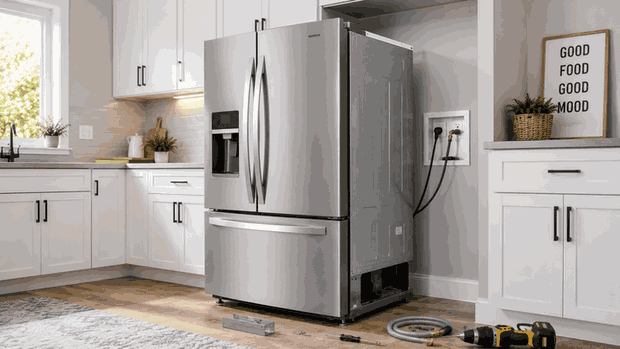
Refrigerator Installation in Orange County, CA
A refrigerator should fit the kitchen correctly, remain stable, release heat efficiently, and maintain consistent temperatures. Installation becomes more complex when the appliance includes a built-in freezer, automatic ice maker, water dispenser, convertible drawer, or custom cabinet panel.
Ambulance Appliance Repair provides refrigerator installation in Orange County, CA for freestanding, counter-depth, French-door, side-by-side, built-in, panel-ready, and column refrigerators.
Matching the Refrigerator to the Kitchen
Professional refrigerator installation begins by comparing the appliance dimensions with the actual kitchen opening.
The width, height, and depth should be checked at several points because floors, walls, and cabinets may not be perfectly straight.
Measuring the Refrigerator Opening
Important measurements include:
opening width;
available height;
cabinet depth;
rear clearance;
side clearance;
upper ventilation space;
door-opening clearance;
freezer-drawer extension space.
A refrigerator may fit inside the opening but still fail to operate correctly if its doors, handles, hinges, or freezer drawers cannot move freely.
Checking Door and Drawer Clearance
The refrigerator needs enough room for:
full door movement;
handle clearance;
hinge rotation;
shelf and bin removal;
freezer-drawer extension;
access to nearby cabinets.
A wall, island, deep countertop, or cabinet handle can interfere with normal refrigerator use even when the appliance fits inside the opening.
Counter-Depth and Built-In Refrigerator Fit
Counter-depth refrigerators sit closer to the cabinet line, but their doors may need to project beyond nearby panels so the hinges can move correctly.
Built-in and panel-ready refrigerators leave little room for measurement errors. Their installation may require exact cabinet dimensions, specific ventilation openings, secure anchoring, and precise panel alignment.
Requirements for Different Refrigerator Designs
Different refrigerator configurations require different clearances, leveling methods, and cabinet preparation.
Top-Freezer Refrigerators
Top-freezer refrigerators need enough clearance for the upper freezer door to open fully.
Nearby cabinets, walls, and handles should not block access to freezer shelves or door bins.
Bottom-Freezer Refrigerators
Bottom-freezer refrigerators require enough space for the freezer drawer or lower door to extend completely.
The drawer must open without rubbing against flooring, cabinet trim, or nearby appliances.
French-Door Refrigerators
French-door refrigerators must be leveled so both fresh-food doors align correctly.
The center flap, also called the mullion, should close properly when the doors meet. Uneven leveling can affect door alignment, gasket contact, and automatic closing.
Side-by-Side Refrigerators
Side-by-side refrigerators need clearance for two full-height doors.
The refrigerator and freezer doors should open far enough to allow access to shelves, drawers, bins, and the ice-maker area.
Built-In and Column Refrigerators
Built-in refrigerator and freezer columns may require:
anti-tip hardware;
cabinet anchors;
joining kits;
trim panels;
ventilation grilles;
precise door alignment.
Refrigerator and Freezer Column Alignment
When separate refrigerator and freezer columns are installed together, both appliances must remain level and evenly aligned.
Joining hardware, door spacing, cabinet gaps, and toe-kick alignment should be checked before the installation is completed.
Reversible Refrigerator Doors
Some refrigerator doors can be reversed to open from the opposite side.
Door reversal should only be completed when the manufacturer permits it and provides approved hinge, handle, wiring, and gasket instructions.
Delivery Access and Final Positioning
The delivery route should be reviewed before the refrigerator enters the home.
Doorways, hallways, stairs, floor transitions, ceiling height, and kitchen corners can affect safe movement.
Preparing the Delivery Route
Before delivery, the route should be checked for:
narrow doorways;
tight corners;
stairs and landings;
raised thresholds;
finished flooring;
low ceiling areas;
nearby furniture and cabinets.
Confirming the route in advance helps protect the refrigerator, flooring, walls, doors, and surrounding surfaces.
Temporary Removal of Doors and Handles
Refrigerator doors, freezer drawers, or handles may need temporary removal when permitted by the manufacturer.
After reassembly, the following should be checked:
door alignment;
hinge movement;
gasket contact;
handle security;
electrical connections inside the door;
water tubing for the dispenser.
Installation Conditions in Orange County Homes
In Orange County homes, refrigerators may be installed in:
remodeled kitchens;
condominiums;
custom cabinet openings;
garages;
compact kitchens;
narrow residential layouts.
Different flooring heights, cabinet depths, and delivery restrictions can change the installation approach.
Power, Ventilation, and Heat Release
Correct electrical access and ventilation help the refrigerator maintain stable cooling performance.
Refrigerator Electrical Requirements
Most household refrigerators connect to a grounded electrical outlet that matches the manufacturer’s voltage and circuit requirements.
Extension cords, loose adapters, damaged receptacles, and unapproved electrical connections should not be used.
The power cord must remain free from:
pinching;
sharp bends;
hot surfaces;
moving parts;
pressure from the refrigerator cabinet.
Refrigerator Ventilation Clearances
Depending on the model, heat may leave through:
the rear of the refrigerator;
the side walls;
the lower grille;
the upper cabinet vent;
a front ventilation system.
Required clearances must remain open after the appliance is positioned.
Why Refrigerator Airflow Matters
Blocked ventilation can increase compressor operating time and reduce cooling stability.
Restricted airflow may contribute to:
excessive heat;
longer cooling cycles;
increased energy use;
unstable refrigerator temperatures;
reduced component life.
Water Connection for the Ice Maker and Dispenser
A refrigerator with an automatic ice maker or water dispenser requires a secure water supply connection.
The shutoff valve, tubing, connector size, water filter, pressure requirements, and line routing should be checked before final placement.
Connecting the Refrigerator Water Line
The water line must not be:
kinked;
crushed;
stretched tightly;
trapped beneath the refrigerator;
placed against hot or sharp surfaces.
Once connected, all fittings should be inspected for leaks.
Older tubing or connectors should not be reused when they show corrosion, cracking, damaged threads, or worn seals.
Ice Maker Installation Requirements
Ice makers may be located:
inside the freezer;
in the refrigerator door;
inside the fresh-food compartment;
within a dedicated ice-making section.
Each design uses a different water path, freezing area, and storage system.
Starting the Ice Maker
After installation, the water supply should be opened and the ice maker activated according to the manufacturer’s instructions.
The first batches of ice may need to be discarded before normal use.
Water Dispenser Setup
The dispenser may require flushing to remove trapped air and residue from the new water line or filter.
Water flow, filter seating, dispenser controls, and connection points should be checked for proper operation and leaks.
Built-In Freezer and Convertible Cooling Areas
The freezer may be positioned at the top, bottom, side, or inside a flexible drawer.
Installation should allow baskets, shelves, and drawers to extend without rubbing against cabinets, flooring, or nearby appliances.
Built-In Freezer Alignment
An uneven refrigerator can prevent the freezer door or drawer gasket from making complete contact.
Warm air entering the freezer may contribute to:
frost buildup;
interior moisture;
unstable temperatures;
longer cooling cycles;
food-storage problems.
Convertible Temperature Zones
Some refrigerators include convertible drawers or cooling zones that can operate as:
freezer storage;
fresh-food storage;
beverage storage;
temperature-controlled storage.
Internal food, containers, and packaging should not block the air vents inside these compartments.
Leveling, Door Alignment, and Startup Checks
The refrigerator cabinet should stand firmly without rocking.
Depending on the design, leveling may involve adjustable legs, front rollers, hinges, built-in supports, or cabinet-mounting hardware.
Leveling the Refrigerator
Correct leveling helps:
refrigerator doors close naturally;
freezer drawers remain shut;
door gaskets seal evenly;
the cabinet stay stable;
French-door center flaps align correctly.
The refrigerator should not lean excessively or shift when the doors are opened.
Checking Door and Panel Alignment
Before installation is completed, the following should be reviewed:
door height;
hinge alignment;
center flap movement;
handle position;
gasket contact;
freezer-drawer alignment;
decorative panel spacing.
Panel-ready models may require additional hinge, panel, or door adjustments after the custom fronts are installed.
Waiting After Refrigerator Transport
If the refrigerator was transported on its side or at a steep angle, it may need to remain upright before power is connected.
The required waiting period should follow the instructions for the exact model.
Refrigerator Startup Testing
A startup check should confirm that the following features respond correctly:
interior lights;
digital controls;
fans;
refrigerator cooling;
freezer cooling;
convertible zones;
water dispenser;
automatic ice maker;
smart features.
Stable temperatures take time, so the refrigerator and freezer should not be loaded too early.
Frequently Asked Questions About Refrigerator Installation
Can Every Refrigerator Be Placed Inside Cabinetry?
No. Only models approved for built-in or enclosed installation should be placed inside cabinetry.
Freestanding refrigerators usually require additional ventilation space around the rear, sides, or top.
Does Installation Include the Ice Maker Connection?
It can include connecting the approved water line, checking the shutoff valve, inspecting the fittings for leaks, seating the water filter, flushing the dispenser, and activating the ice maker when the existing connections are suitable.
Why Does the Freezer Drawer Need Leveling?
Incorrect leveling can prevent the freezer drawer from sealing evenly.
Warm air entering the freezer may lead to frost, moisture buildup, unstable temperatures, and extended cooling cycles.
How Soon Can Food Be Placed Inside?
The refrigerator and built-in freezer need time to reach stable food-storage temperatures.
The exact period depends on the appliance model, room temperature, initial settings, and manufacturer guidance.
Refrigerator Installation Across Orange County
Professional refrigerator installation helps protect the refrigerator, built-in freezer, ice maker, cabinetry, flooring, electrical connection, and water supply.
Ambulance Appliance Repair installs freestanding, counter-depth, French-door, side-by-side, built-in, panel-ready, and column refrigerators across Orange County.
Call Ambulance Appliance Repair at +1 (949) 443-1212 for professional refrigerator installation in Orange County, CA.
Contact Information
Ambulance Appliance Repair – Orange County, CA
Address: 462 Santa Maria, Irvine, CA 92606
Email: Sales@ambulanceapplianceca.com
Phone: +1 (949) 443-1212
Open Hours: Monday – Sunday, 8:00 AM – 8:00 PM
