
 +1 949-443-1212
CONTACT US
- +1 949-443-1212
- 426 Santa Maria, Irvine, CA 92606
- sales@ambulanceapplianceca.com
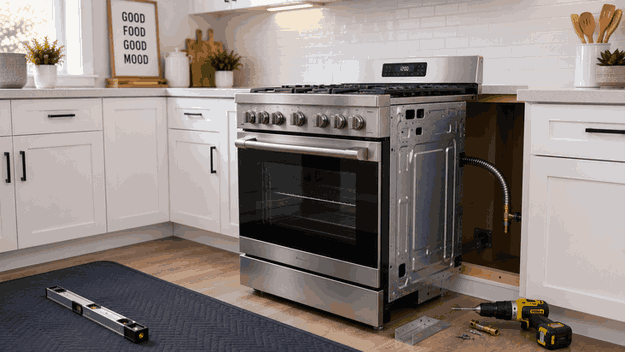
Stove Installation in Orange County, CA
A stove should fit the kitchen opening, remain stable, connect to the correct fuel or electrical supply, and allow every burner and oven function to operate safely. Proper installation also depends on anti-tip protection, countertop alignment, ventilation, door clearance, and final testing.
Ambulance Appliance Repair provides stove installation in Orange County, CA for gas, electric, induction, dual-fuel, freestanding, slide-in, front-control, and drop-in residential stoves.
Checking the Kitchen Opening
The kitchen opening should be measured for width, height, depth, rear clearance, countertop position, backsplash spacing, and floor condition.
Measurements should be taken at more than one point because walls, cabinets, countertops, and floors may not be perfectly straight.
Measuring the Available Space
Important measurements and conditions include:
opening width;
available height and depth;
rear utility clearance;
countertop height;
backsplash spacing;
door-opening space;
lower-drawer clearance;
floor stability and level.
A stove may fit between the cabinets but still sit too high, too low, or too far forward.
The oven door and lower drawer also need enough space to open without hitting a kitchen island, wall, cabinet handle, or floor trim.
Preparing for a Replacement Stove
A replacement model may use different:
side trim;
rear clearances;
cord placement;
gas connection points;
control-panel depth;
anti-tip mounting locations.
Similar exterior dimensions do not always mean that the new stove will fit or connect in the same way as the previous appliance.
Stove Designs and Placement Needs
Different stove designs require different cabinet clearances, support conditions, trim alignment, and utility connections.
Freestanding Stoves
Freestanding stoves have finished sides and may be positioned between cabinets or at the end of a cabinet run.
They need enough rear space for the power cord, gas connector, electrical receptacle, and anti-tip hardware.
The appliance should not press against gas lines, wiring, or ventilation openings.
Slide-In Stoves
Slide-in stoves align closely with surrounding countertops.
Their cooktop edges, side trim, front controls, and countertop overlap require accurate positioning to prevent:
visible gaps;
pressure against cabinetry;
uneven countertop alignment;
blocked ventilation;
restricted door movement.
Front-Control Stoves
Front-control stoves place the operating controls on the front of the appliance.
Depending on the model, they may have different side-panel, trim, or countertop requirements than traditional freestanding stoves.
Drop-In Stoves
Drop-in stoves depend on a prepared cabinet base and exact cutout dimensions because they may not rest directly on the floor.
The supporting cabinet must remain strong, level, and compatible with the model’s mounting points and ventilation requirements.
Installation Conditions in Orange County Homes
In Orange County homes, stove installation may involve:
remodeled kitchens;
older cabinet openings;
custom countertops;
compact condominiums;
replacement appliances with different dimensions;
uneven or raised flooring.
Reviewing the opening before installation helps prevent fit problems, countertop interference, cabinet damage, and restricted utility access.
Gas Supply Preparation
A gas stove requires a secure connection, compatible fittings, and the correct fuel type.
Gas Connection Requirements
A gas stove installation may require:
an approved flexible gas connector;
compatible fittings;
an accessible shutoff valve;
adequate rear clearance;
the correct gas pressure;
model-compatible connection points.
The connector should not be stretched, twisted, sharply bent, or trapped behind the appliance.
Gas Leak and Burner Testing
Every gas fitting must be checked for leaks before operation.
After the connection is verified, the following should be reviewed:
burner ignition;
flame stability;
control response;
oven ignition;
broiler operation, when included.
Unstable flames, delayed ignition, or gas odors should be corrected before the stove is used.
Natural Gas and Propane Compatibility
A natural-gas stove should not be connected to propane unless the manufacturer approves conversion for that exact model.
The conversion must use the correct components, instructions, regulator settings, and burner adjustments.
Electrical and Induction Requirements
Electric, induction, gas, and dual-fuel stoves can have different electrical requirements.
Electric Stove Connections
Electric stoves commonly require a dedicated high-voltage circuit.
The following must match the appliance specifications:
receptacle type;
power cord configuration;
voltage;
amperage;
wiring method;
grounding requirements.
The cord should remain clear of sharp edges, hot surfaces, moving parts, and pressure from the stove cabinet.
Induction Stove Requirements
Induction stoves use electromagnetic cooking zones and may have greater electrical demands than standard electric models.
The existing electrical circuit should be confirmed before the stove is moved into permanent position.
Compatible cookware is also required for normal induction operation.
Gas and Dual-Fuel Electrical Connections
Gas stoves still require electricity for features such as:
electronic ignition;
control boards;
oven lights;
convection fans;
timers;
displays.
Dual-fuel stoves may require both a gas connection and a higher-capacity electrical circuit.
Unsafe Electrical Connections
Extension cords, loose adapters, damaged receptacles, and improvised wiring should not be used.
The power connection must remain accessible, secure, and protected from excessive heat or physical damage.
Anti-Tip Protection and Leveling
Anti-tip protection and correct leveling are essential parts of safe stove installation.
Installing the Anti-Tip Device
A stove can tip forward when heavy pressure or weight is placed on an open oven door.
An approved anti-tip bracket or manufacturer-specified restraint helps secure the appliance to the floor or wall.
The bracket must align with the designated rear leg or mounting point.
Verifying Anti-Tip Engagement
After the stove reaches its final position, the anti-tip device should be checked to confirm that the correct rear leg or mounting point is fully engaged.
The appliance should not shift or tip forward when the oven door is opened.
Leveling the Stove
The leveling feet should be adjusted so the stove stands firmly without rocking.
Correct leveling supports:
stable cookware;
even cooktop alignment;
proper oven performance;
smooth door movement;
secure anti-tip engagement;
alignment with nearby countertops.
An unlevel stove may also cause pans to sit unevenly or oven racks to slide unexpectedly.
Countertop Clearance and Ventilation
The cooktop and oven release heat during operation.
Manufacturer-required clearances from walls, cabinets, trim, backsplashes, countertops, and combustible materials must be maintained.
Protecting Ventilation Openings
Rear vents, cooling openings, and oven exhaust areas should remain unobstructed.
Decorative fillers, backsplash materials, countertop edges, and cabinet trim must not interfere with airflow.
Blocked ventilation can contribute to:
excessive heat;
reduced cooking performance;
control-panel overheating;
cabinet damage;
premature component wear.
Aligning the Stove With the Countertop
The cooktop should align safely with the surrounding countertop.
Incorrect height may create gaps, interfere with cookware, place trim under pressure, or allow spills to collect between the appliance and cabinets.
Range Hood and Kitchen Ventilation
A range hood or approved kitchen ventilation system can help remove:
cooking heat;
steam;
smoke;
grease particles;
odors.
The hood’s width, mounting height, and airflow capacity should suit the stove type and kitchen layout.
Testing Burners and Oven Functions
A complete functional test should include every surface burner, cooking zone, and oven feature.
Testing Gas Burners
Each gas burner should ignite promptly and maintain a stable flame.
The burner caps, grates, ignition system, and control knobs should also be checked for correct placement and response.
Testing Electric and Induction Cooking Zones
Electric and induction elements should respond to the selected heat settings.
Testing should confirm that:
each zone activates;
controls respond correctly;
indicator lights operate;
cookware is detected on induction models;
no unusual noise or errors occur.
Testing Oven Features
Depending on the stove model, the following functions may be reviewed:
bake;
broil;
convection;
warming functions;
oven lights;
timer and controls;
temperature settings;
smart features.
Door alignment, rack movement, lower drawers, anti-tip engagement, and unusual vibration should also be checked before completion.
Initial Heating Cycle
A new stove may produce a temporary odor during its first heating cycle.
The room should be ventilated, and the manufacturer’s initial-use or burn-in instructions should be followed before cooking food.
Frequently Asked Questions About Stove Installation
Does Every Stove Need an Anti-Tip Bracket?
Most freestanding and slide-in stoves require an approved anti-tip device.
The exact bracket design and mounting method depend on the appliance model.
Can a Gas Stove Be Connected to Propane?
Only when the stove is approved for propane conversion and the correct manufacturer-specified parts and procedures are used.
Why Does Countertop Height Matter?
The stove should align safely with the surrounding surfaces.
Incorrect height may create gaps, interfere with cookware, restrict trim, or place pressure on the cooktop edges.
Should Every Burner Be Tested?
Yes. Testing confirms that every gas burner, electric element, or induction cooking zone responds correctly and that the oven functions as expected.
Stove Installation Across Orange County
Professional installation helps protect the stove, cabinetry, countertops, flooring, gas supply, electrical system, ventilation path, and surrounding surfaces.
Ambulance Appliance Repair installs gas, electric, induction, dual-fuel, freestanding, slide-in, front-control, and drop-in stoves across Orange County.
Call Ambulance Appliance Repair at +1 (949) 443-1212 for professional stove installation in Orange County, CA.
Contact Information
Ambulance Appliance Repair – Orange County, CA
Address: 462 Santa Maria, Irvine, CA 92606
Email: Sales@ambulanceapplianceca.com
Phone: +1 (949) 443-1212
Open Hours: Monday – Sunday, 8:00 AM – 8:00 PM
