

 +1 949-443-1212
- Expert Washing Machine Repair for All Major Brands
- Trusted Dryer Repair That Gets Laundry Moving Again
- Dishwasher Repair That Restores Clean Results and Kitchen Convenience
- Skilled Washer-Dryer Combo Repair for Space-Saving Laundry Systems
- Commercial Dryer Repair That Keeps Laundry Operations Running
- Commercial Washer Repair for High-Demand Laundry Equipment
- Professional Dishwasher Installation in Orange County, CA
- Safe and Reliable Dryer Installation in Orange County, CA
- All-in-One Washer Dryer Combo Installation in Orange County, CA
- Washing Machine Installation in Orange County, CA for Top-Load and Front-Load Washers
CONTACT US
- +1 949-443-1212
- 426 Santa Maria, Irvine, CA 92606
- sales@ambulanceapplianceca.com
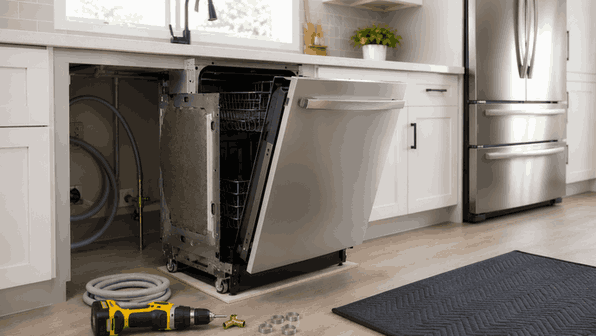
Dishwasher Installation in Orange County, CA
A dishwasher should sit securely inside the cabinet opening, fill and drain without leaking, and allow the door and racks to move freely. Proper installation depends on plumbing connections, electrical access, floor condition, cabinet support, drain routing, and appliance design.
Ambulance Appliance Repair provides dishwasher installation in Orange County, CA for built-in, panel-ready, drawer, compact, portable, and smart residential dishwashers.
Preparing the Cabinet Opening
The cabinet opening should be checked for width, height, depth, floor level, toe-kick space, and access to nearby connections. Measurements should be taken at both the front and rear because kitchen cabinets are not always perfectly square.
Raised tile, cabinet trim, and countertop overhang can reduce usable space or make future dishwasher removal difficult. The door must open without hitting an island, cabinet handle, flooring, or decorative panel.
Important Cabinet Measurements
Before installation, the following areas should be checked:
opening width;
available height;
cabinet depth;
floor level;
toe-kick clearance;
door-opening space;
access to plumbing and electrical connections.
Accurate measurements help prevent cabinet damage, door interference, appliance misalignment, and restricted service access.
Dishwasher Designs and Installation Needs
Different dishwasher designs require different cabinet support, mounting methods, utility connections, and clearance.
Built-In Dishwashers
Built-in dishwashers connect permanently to the water supply, drainage system, and electrical source.
The cabinet opening must provide enough space for the appliance body, insulation, hoses, wiring, and adjustable feet without pressing against the dishwasher.
Panel-Ready Dishwashers
Panel-ready dishwashers use a custom decorative front designed to match the surrounding cabinetry.
The panel must follow the manufacturer’s limits for:
size;
thickness;
weight;
mounting position.
An incorrect panel can affect hinge balance, door movement, sealing, and closing performance.
Drawer Dishwashers
Drawer dishwashers may use one or two separate wash drawers and require accurate cabinet support.
Each drawer must open fully without hitting nearby cabinets, handles, flooring, or kitchen islands. Hose routing must also allow normal drawer movement.
Compact Dishwashers
Compact dishwashers are designed for smaller kitchens and narrower openings. Their reduced size may limit access to plumbing, electrical components, and mounting points.
The connection locations should be checked before the appliance is moved into place.
Portable Dishwashers
Portable dishwashers use temporary faucet and drain connections rather than permanent under-counter connections.
Installation requires compatible faucet hardware, adequate hose length, a safe drain path, and an approved electrical outlet.
Water Supply Connection
Most residential dishwashers use a dedicated hot-water connection.
The shutoff valve should remain accessible and operate correctly before the appliance is moved into its final position.
Supply Line Requirements
The dishwasher supply line must match the valve and appliance fittings. It should not be:
twisted;
stretched;
sharply bent;
placed against hot components;
routed near moving parts.
After connection, the fittings should be inspected carefully for moisture.
Older connectors should not be reused when they show corrosion, damaged threads, cracked surfaces, or worn seals.
Drain Routing and Backflow Protection
The dishwasher drain hose may connect to:
a garbage disposal;
a sink drain fitting;
an air gap;
another approved drain point.
Correct drain routing helps prevent wastewater from flowing back toward the dishwasher.
Air Gap and High-Loop Drainage
Some plumbing systems use an air gap above the sink. Other installations use a high drain loop beneath the countertop.
The appropriate configuration depends on the kitchen plumbing layout, manufacturer instructions, and applicable installation requirements.
Garbage Disposal Connection
When a new garbage disposal is used, its dishwasher inlet may still contain a factory knockout plug.
Removing the Knockout Plug
The internal plug must be removed before the dishwasher can drain through the disposal.
If the plug remains in place, the appliance may fill normally but fail to drain.
Preventing Drain Hose Problems
The hose should not be:
kinked;
crushed;
stretched too tightly;
routed against sharp cabinet edges;
trapped behind the appliance.
Poor drain routing may contribute to odors, standing water, slow drainage, backflow, or dishwasher error messages.
Electrical Access and Moisture Protection
A dishwasher may connect with an approved power cord or through a protected electrical junction box.
The electrical supply must match the voltage, circuit, grounding, and connection requirements specified by the appliance manufacturer.
Safe Wiring Placement
Wiring should remain clear of:
moisture;
sharp cabinet edges;
insulation;
hot components;
moving appliance parts.
The electrical cable must not be pinched or trapped beneath the dishwasher.
Extension cords, loose adapters, damaged receptacles, and unapproved wiring connections should not be used.
Leveling, Anchoring, and Door Balance
Correct leveling and secure mounting help the dishwasher remain stable and operate properly.
Leveling the Dishwasher
The appliance should stand firmly on its adjustable feet.
Poor leveling can cause:
the door to swing open or closed;
racks to roll forward or backward;
water to collect unevenly;
the dishwasher to appear misaligned;
the door gasket to seal incorrectly.
Anchoring the Appliance
The dishwasher must be secured so it does not tip forward when the door and loaded racks are open.
Mounting may involve:
the countertop;
adjacent cabinets;
side-mounting brackets;
another manufacturer-approved anchoring method.
Mounting Under Stone Countertops
Granite, quartz, marble, and other stone countertops often require side-mounting hardware because the countertop should not be drilled unless the mounting system specifically permits it.
Adjusting Panel-Ready Dishwasher Doors
A decorative cabinet panel changes the weight of the dishwasher door.
Panel-ready models may require spring, hinge, or door-tension adjustment after the panel is installed to ensure smooth opening and controlled closing.
Insulation, Noise, and Final Positioning
Sound blankets, side insulation, and lower access panels should remain correctly positioned.
Removing, compressing, or folding these materials can increase operating noise or interfere with the dishwasher’s fit inside the cabinet opening.
Installation Conditions in Orange County Homes
In Orange County homes, dishwashers are often installed in:
remodeled kitchens;
compact condominiums;
custom kitchen islands;
older cabinet openings;
kitchens with raised flooring.
Flooring height, countertop design, and limited sink-base access can change the installation approach.
The appliance should be moved carefully into place so the water supply line, drain hose, and electrical connection are not pinched.
Complete Cycle and Leak Testing
A proper installation test checks more than whether the controls turn on.
The dishwasher should:
fill correctly;
circulate water;
drain completely;
heat as intended;
complete a selected program;
operate without leaking.
Components Checked During Testing
The following areas should be inspected:
water supply connection;
drain hose and drain point;
door gasket;
pump area;
racks;
spray arms;
detergent dispenser;
controls;
surrounding cabinets and flooring.
Noise, weak drainage, door rubbing, standing water, or moisture should be corrected before regular use.
Frequently Asked Questions About Dishwasher Installation
Can a Dishwasher Be Installed Under a Stone Countertop?
Yes. Side-mounting brackets or another approved installation method may be used when the countertop should not be drilled.
Does a New Dishwasher Need an Air Gap?
The required drainage method depends on the plumbing layout and applicable installation requirements.
Some installations use an air gap, while others use an approved high drain loop beneath the countertop.
Why Does a Panel-Ready Dishwasher Need Adjustment?
The decorative panel changes the weight and balance of the door.
Hinge, spring, or door-tension adjustment may be needed for smooth opening, controlled closing, and proper sealing.
Should the Dishwasher Be Tested With a Full Cycle?
Yes. A full cycle helps confirm proper filling, washing, draining, heating, drying, and leak-free operation.
Dishwasher Installation Across Orange County
Professional installation helps protect the dishwasher, cabinetry, flooring, plumbing, drainage system, and electrical connection.
Ambulance Appliance Repair installs built-in, panel-ready, drawer, compact, portable, and smart dishwashers across Orange County.
Call Ambulance Appliance Repair at +1 (949) 443-1212 for dishwasher installation in Orange County, CA.
Contact Information
Ambulance Appliance Repair – Orange County, CA
Address: 462 Santa Maria, Irvine, CA 92606
Email: Sales@ambulanceapplianceca.com
Phone: +1 (949) 443-1212
Open Hours: Monday – Sunday, 8:00 AM – 8:00 PM
