
 +1 949-443-1212
- Expert Washing Machine Repair for All Major Brands
- Trusted Dryer Repair That Gets Laundry Moving Again
- Dishwasher Repair That Restores Clean Results and Kitchen Convenience
- Skilled Washer-Dryer Combo Repair for Space-Saving Laundry Systems
- Commercial Dryer Repair That Keeps Laundry Operations Running
- Commercial Washer Repair for High-Demand Laundry Equipment
- Professional Dishwasher Installation in Orange County, CA
- Safe and Reliable Dryer Installation in Orange County, CA
- All-in-One Washer Dryer Combo Installation in Orange County, CA
- Washing Machine Installation in Orange County, CA for Top-Load and Front-Load Washers
CONTACT US
- +1 949-443-1212
- 426 Santa Maria, Irvine, CA 92606
- sales@ambulanceapplianceca.com
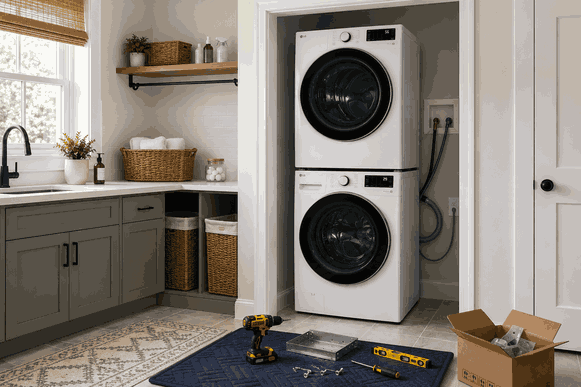
Washer Dryer Combo Installation in Orange County, CA
A washer dryer combo handles washing and drying inside one cabinet and one drum. Proper installation must account for water supply, drainage, electrical power, airflow, leveling, and service access.
Ambulance Appliance Repair provides washer dryer combo installation in Orange County, CA for ventless, condenser, heat-pump, compact, full-size, and select vented all-in-one models.
Understanding the All-in-One Design
A washer dryer combo is not the same as a stacked laundry pair.
A stacked setup uses two separate appliances, while an all-in-one combo unit washes and dries clothing inside the same drum.
Space-Saving Design and Installation Needs
This design can save floor space, but the installation area still needs enough depth for:
water supply hoses;
the drain hose;
the power cord;
door movement;
airflow;
service access.
Some models allow under-counter or closet placement, while others require open space around ventilation points.
The exact installation method should follow the manufacturer’s clearance, utility, and ventilation requirements.
Space, Floor, and Delivery Planning
The installation opening should be measured before the appliance is delivered.
Measuring the Installation Area
Important measurements include:
opening width;
available height;
cabinet or niche depth;
rear utility clearance;
front door-opening space;
access to filters and service panels.
A combo unit may fit inside a niche while leaving too little room to load clothing, open the detergent compartment, or reach the drain filter.
Checking the Floor
The floor should be firm, stable, and level.
Sloped, flexible, or uneven surfaces can increase:
vibration;
operating noise;
appliance movement;
stress on the suspension system;
door-alignment problems.
Planning the Delivery Route
The delivery route should be checked for:
doorway width;
narrow hallways;
stairs;
floor transitions;
tight corners;
nearby walls and cabinets.
In Orange County homes, washer dryer combo units are often installed in condominiums, accessory dwelling units, kitchens, hallway closets, garages, and compact utility rooms.
Reviewing the route in advance helps protect the appliance, flooring, walls, and surrounding surfaces.
Water Inlet Setup
Most all-in-one washer dryer units connect to hot and cold water valves, although some compact models may use a different arrangement.
Connecting the Supply Hoses
The supply hoses must match the appliance inlets and shutoff valves.
They should not be:
cross-threaded;
twisted;
stretched;
sharply bent;
pressed against sharp surfaces;
trapped behind the appliance.
The hot and cold hoses should be connected to the correct inlets when the model uses both water temperatures.
Checking the Shutoff Valves
The water valves should operate correctly and remain accessible after the appliance is positioned.
Once the hoses are attached, the water should be opened gradually and every fitting inspected for leaks.
Older hoses should not be reused when they show cracks, corrosion, damaged threads, bulging, or worn seals.
Drain Routing for Washing and Drying
The drain hose may connect to:
a standpipe;
a laundry sink;
an approved drain fitting.
It must be secured so it cannot slip out when the drain pump discharges water.
Drain Height and Hose Position
The drain hose must follow the manufacturer’s requirements for height, insertion depth, and routing.
Incorrect placement may cause:
siphoning;
slow drainage;
standing water;
repeated drain errors;
water backing up into the appliance.
The hose should not be kinked, crushed, or pushed too deeply into the drain opening.
Condensate Drainage During Drying
Ventless condenser and heat-pump models may send moisture collected during the drying process through the same drain system.
The hose must remain open and correctly positioned during both washing and drying.
Preventing a Trapped Drain Hose
During final positioning, the drain hose should be checked to confirm that it has not become pinched between the appliance and the wall or cabinet.
A restricted hose can affect both wash-water drainage and drying condensate removal.
Electrical Requirements by Model
Electrical requirements vary between washer dryer combo models.
Some units use a standard household outlet, while others require a dedicated circuit or a different voltage configuration.
Matching the Outlet and Circuit
The electrical supply must match the appliance’s:
voltage;
amperage;
plug configuration;
grounding requirements;
dedicated-circuit instructions.
The power cord should remain clear of moisture, sharp edges, hot surfaces, and moving components.
Extension cords, loose adapters, damaged receptacles, and improvised wiring should not be used.
Shipping Hardware and Drum Protection
Front-loading washer dryer combos commonly use shipping bolts, braces, or spacers to secure the drum during transportation.
Removing Shipping Bolts
All required shipping hardware must be removed before the appliance is operated.
Leaving shipping bolts installed can cause:
severe vibration;
loud banging;
appliance movement;
cabinet damage;
suspension-system damage;
stress on the drum assembly.
Storing Reusable Shipping Hardware
When recommended by the manufacturer, reusable bolts and spacers should be stored for a future move.
They should not be reinstalled while the appliance is in normal operation.
Ventless, Heat-Pump, and Vented Drying
Washer dryer combo units may use different drying technologies, and each design has specific installation needs.
Ventless Condenser Models
Many washer dryer combos are ventless condenser models.
They remove moisture from warm air and direct the resulting water to a removable tank or drain connection.
These units do not require a traditional exterior dryer vent, but they still need proper cabinet clearance and access to filters and ventilation grilles.
Heat-Pump Washer Dryer Combos
Heat-pump models reuse heated air and generally operate at lower drying temperatures.
Their filters, condenser areas, heat-exchanger sections, and air inlets must remain accessible.
Blocked airflow or neglected filters can increase drying time and reduce performance.
Ventless Does Not Mean Airtight
A ventless appliance still needs adequate airflow around the cabinet.
Blocking grilles or enclosing a model that is not approved for built-in or closet installation can contribute to:
longer drying cycles;
excess heat;
moisture buildup;
reduced drying performance.
Vented Combo Units
Some washer dryer combo models require an exterior exhaust duct.
The duct should lead to an approved outdoor termination and follow the manufacturer’s requirements for:
duct diameter;
approved material;
maximum length;
number of bends;
exterior vent location.
Protecting the Exhaust Duct
The exhaust duct should not be crushed, sharply bent, folded, or trapped behind the appliance.
Restricted airflow can increase drying time and heat buildup.
Leveling and Final Positioning
All adjustable feet should contact the floor firmly, and the appliance should not rock from corner to corner.
Why Accurate Leveling Matters
Correct leveling helps:
control spin vibration;
reduce noise;
support proper drainage;
keep the door aligned;
stabilize the appliance during high-speed spinning.
Anti-vibration pads may reduce transferred sound, but they should not replace correct leveling-foot adjustment.
Protecting Hoses and the Power Cord
During final positioning, the following must remain free from pressure:
hot and cold water hoses;
drain hose;
power cord;
vent duct, when used.
Filters, detergent compartments, drain-pump access, and service panels should remain accessible.
Testing Both Washing and Drying Functions
A washer dryer combo should be tested through both washing and drying functions, not only a short water-fill cycle.
Testing the Wash Cycle
The washing test should confirm:
water intake;
drum tumbling;
detergent-compartment operation;
drainage;
spinning;
stable operation;
leak-free connections.
The supply hoses, door gasket, drain area, and surrounding floor should be inspected for moisture.
Testing the Drying Cycle
The drying test should confirm:
heating;
airflow;
moisture removal;
condensate drainage;
temperature-sensor response;
drying-control operation.
A successful washing cycle does not confirm that the drying system is working correctly.
Understanding Combo Drying Times
Drying may take longer than with a separate full-size dryer.
Drying performance depends on:
load size;
fabric type;
spin speed;
selected program;
drying technology;
room conditions.
Overloading the drum can reduce airflow and extend drying time.
Frequently Asked Questions About Washer Dryer Combo Installation
Does a Washer Dryer Combo Need a Dryer Vent?
Many washer dryer combo units are ventless, but some models require an exterior exhaust duct.
The installation method must match the exact appliance design and manufacturer requirements.
Can a Combo Unit Go Inside a Closet?
Yes, when the model permits closet installation and the space provides the required:
clearances;
airflow;
water connections;
drainage;
electrical access;
service room.
An appliance should not be enclosed in a space that does not meet its ventilation requirements.
Are Combo Units the Same as Stacked Appliances?
No. A washer dryer combo uses one drum for washing and drying.
A stacked system uses a separate washer and dryer secured together with approved stacking hardware.
Why Should the Drying Cycle Be Tested?
A successful wash cycle does not confirm that the heating system, airflow, condensate drainage, moisture sensors, and drying controls are operating correctly.
Washer Dryer Combo Installation Across Orange County
Professional installation helps protect the washer dryer combo, plumbing, drainage system, flooring, electrical connection, ventilation path, and surrounding cabinetry.
Ambulance Appliance Repair installs ventless, condenser, heat-pump, compact, full-size, and select vented washer dryer combo units across Orange County.
Call Ambulance Appliance Repair at +1 (949) 443-1212 for professional washer dryer combo installation in Orange County, CA.
Contact Information
Ambulance Appliance Repair – Orange County, CA
Address: 462 Santa Maria, Irvine, CA 92606
Email: Sales@ambulanceapplianceca.com
Phone: +1 (949) 443-1212
Open Hours: Monday – Sunday, 8:00 AM – 8:00 PM
