
 +1 949-443-1212
- Expert Washing Machine Repair for All Major Brands
- Trusted Dryer Repair That Gets Laundry Moving Again
- Dishwasher Repair That Restores Clean Results and Kitchen Convenience
- Skilled Washer-Dryer Combo Repair for Space-Saving Laundry Systems
- Commercial Dryer Repair That Keeps Laundry Operations Running
- Commercial Washer Repair for High-Demand Laundry Equipment
- Professional Dishwasher Installation in Orange County, CA
- Safe and Reliable Dryer Installation in Orange County, CA
- All-in-One Washer Dryer Combo Installation in Orange County, CA
- Washing Machine Installation in Orange County, CA for Top-Load and Front-Load Washers
CONTACT US
- +1 949-443-1212
- 426 Santa Maria, Irvine, CA 92606
- sales@ambulanceapplianceca.com
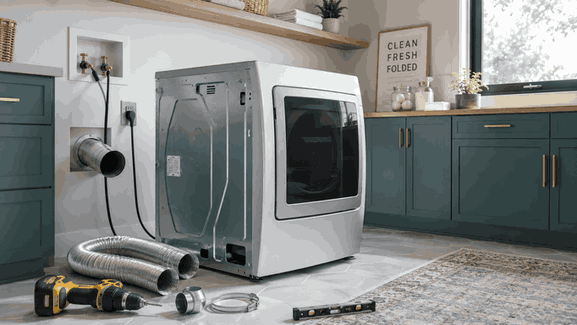
Dryer Installation in Orange County, CA
A dryer should heat, tumble, and release moisture without overheating the laundry area or straining the electrical, gas, or ventilation system. Correct installation depends on the dryer design, available utility connections, room layout, and exhaust path.
Ambulance Appliance Repair provides dryer installation in Orange County, CA for electric, gas, vented, ventless, heat-pump, compact, stacked, and pedestal-mounted residential dryers.
Evaluating the Installation Location
The laundry area should be checked before the dryer is moved into position. Important conditions include floor stability, doorway width, rear clearance, door movement, ventilation access, and the location of the electrical outlet or gas shutoff valve.
A dryer needs sufficient space behind it for the power cord, gas connector, or exhaust duct. Pushing the appliance too close to the wall can crush the duct or place pressure on utility connections.
Clearance and Accessibility Requirements
The installation area should provide enough room for:
the dryer door to open fully;
the appliance to remain level;
proper exhaust duct routing;
safe electrical or gas connections;
access to filters and service panels;
future maintenance or removal.
Closet installations may require ventilation openings or a louvered door. Lint filters, moisture tanks, drain connections, and service panels should remain accessible after installation.
Dryer Designs and Setup Requirements
Different dryer designs require different electrical, gas, drainage, and ventilation arrangements.
Electric Dryers
Electric dryers commonly use a dedicated high-voltage circuit and a power cord that matches the existing receptacle.
The appliance rating, plug configuration, outlet condition, and circuit requirements should be confirmed before the dryer is moved into position.
Gas Dryers
Gas dryers use fuel to produce heat and electricity to operate the drum, controls, ignition system, sensors, and interior lights.
They require:
an accessible gas shutoff valve;
an approved flexible gas connector;
compatible fittings;
a suitable electrical outlet;
proper exhaust ventilation.
Vented Dryers
Vented dryers release warm, moist air outdoors through an exhaust duct.
The vent system must provide a clear and properly sized path from the dryer to an approved exterior termination point.
Ventless and Heat-Pump Dryers
Ventless condenser dryers and heat-pump dryers manage moisture inside the appliance instead of sending it outdoors.
Depending on the model, collected moisture may enter a removable tank or flow through a drain hose.
These dryers still require proper clearance, airflow around the cabinet, and access to filters, tanks, or drainage connections.
Compact, Stacked, and Pedestal-Mounted Dryers
Compact dryers may have different electrical, drainage, and airflow requirements than full-size appliances.
Pedestal-mounted dryers require a compatible base that can safely support the appliance.
Stacked dryers must be installed above a compatible washer using manufacturer-approved stacking hardware.
Exhaust Duct Routing and Airflow
A vented dryer depends on a clear and correctly configured exhaust route.
The duct should follow the manufacturer’s requirements for:
diameter;
duct material;
maximum vent length;
number of bends;
exterior termination.
Preventing Restricted Airflow
Crushed sections, loose joints, sharp turns, and excessively long vent routes can reduce airflow.
Restricted ventilation may cause:
longer drying times;
excessive heat;
increased energy use;
moisture buildup;
lint accumulation;
repeated dryer shutdowns.
The duct should connect securely without becoming compressed when the dryer is moved into its final position.
Exterior Vent Termination
The exterior vent cover should open freely while the dryer operates and remain clear of lint, debris, landscaping, and other obstructions.
The exhaust should not terminate inside:
an attic;
a garage;
a wall cavity;
a crawl space;
another enclosed area.
Flexible Transition Ducts
A flexible transition section may be used when approved by the appliance manufacturer and applicable installation requirements.
It should not be folded, crushed, stretched excessively, or trapped behind the dryer.
Gas and Electrical Connection Preparation
The dryer’s electrical or fuel connection must match the appliance specifications and remain safely accessible.
Electric Dryer Connections
An electric dryer should connect directly to the correct receptacle.
Extension cords, improvised adapters, loose plugs, and damaged outlets should not be used.
The power cord must remain clear of hot surfaces, sharp cabinet edges, and moving components.
Three-Prong and Four-Prong Dryer Cords
Three-prong and four-prong dryer connections are not automatically interchangeable.
The cord configuration, grounding method, terminal connections, and receptacle must follow the dryer manufacturer’s instructions and applicable electrical requirements.
Gas Dryer Connections
For a gas dryer, the connector should not be:
stretched;
twisted;
sharply bent;
compressed behind the appliance;
placed against hot or moving parts.
After the fittings are secured, the gas connection must be checked for leaks before the dryer is operated.
Natural Gas and Propane Compatibility
Fuel type must be confirmed before installation.
A dryer designed for natural gas should not be connected to propane unless the manufacturer provides an approved conversion kit and conversion procedure.
Leveling, Door Clearance, and Stacked Installation
Correct leveling and secure positioning help reduce noise, movement, and uneven stress on the appliance.
Leveling the Dryer
The dryer should stand firmly on all adjustable leveling feet.
A dryer that rocks or tilts may:
vibrate excessively;
produce unusual noise;
move during operation;
place uneven stress on internal supports;
prevent the door from closing correctly.
Checking Dryer Door Clearance
The dryer door should open fully without hitting a wall, cabinet, washer, countertop, or nearby appliance.
Some dryer doors can be reversed to improve access, but only when the model supports manufacturer-approved door reversal.
Installing a Stacked Washer and Dryer
A stacked installation uses two separate appliances.
The dryer must be placed above the washer using a compatible, manufacturer-approved stacking kit. It should never rest unsecured on top of the washer.
The stacked pair must remain level, stable, and accessible for utility connections and future service.
Installation Conditions in Orange County Homes
In Orange County homes, dryers are often installed in:
garages;
upstairs laundry rooms;
hallway closets;
condominiums;
compact utility spaces.
Limited depth, narrow doorways, sloped floors, closet ventilation, and long exhaust routes can change the installation approach.
Testing Heat, Airflow, and Controls
A complete functional test should confirm that the drum rotates, the selected heat source operates, and exhaust air moves through the intended route.
Testing Gas and Electric Dryers
Gas dryers should ignite correctly and maintain stable burner operation.
Electric dryers should heat normally without unusual noise, overheating, electrical odor, or movement at the plug and receptacle.
Checking Additional Dryer Features
When included, the following features should also be reviewed:
moisture sensors;
steam functions;
smart controls;
interior lighting;
drain connections;
automatic drying programs;
lint filter access.
Unusual vibration, rattling, weak airflow, excessive heat, or abnormal noise should be corrected before regular use.
Frequently Asked Questions About Dryer Installation
Does Every Dryer Need an Exterior Vent?
No. Traditional vented dryers require an outdoor exhaust route, while condenser and heat-pump dryers may operate without one.
Ventless dryers still need proper clearance and convenient access to filters, moisture tanks, or drain connections.
Can an Old Dryer Cord Be Reused?
An existing dryer cord may be reused only when it matches the new dryer, remains in good condition, and is permitted by the manufacturer.
The power cord, plug, terminal connections, and receptacle should be inspected before connection.
Is a Stacking Kit Required?
Yes. Separate washers and dryers must use a compatible, manufacturer-approved stacking kit to keep the upper appliance securely attached.
Why Is Dryer Leveling Important?
Proper leveling reduces movement, vibration, noise, and uneven stress.
It also helps the dryer door close correctly and keeps the appliance stable during operation.
Dryer Installation Across Orange County
Professional dryer installation helps protect the appliance, laundry area, electrical supply, gas connection, and exhaust system.
Ambulance Appliance Repair installs electric, gas, vented, ventless, heat-pump, compact, stacked, and pedestal-mounted dryers across Orange County.
Call Ambulance Appliance Repair at +1 (949) 443-1212 for professional dryer installation in Orange County, CA.
Contact Information
Ambulance Appliance Repair – Orange County, CA
Address: 462 Santa Maria, Irvine, CA 92606
Email: Sales@ambulanceapplianceca.com
Phone: +1 (949) 443-1212
Open Hours: Monday – Sunday, 8:00 AM – 8:00 PM
